


Healing Through Rhythm, Symbol, and Story - African Art Therapy for Kids
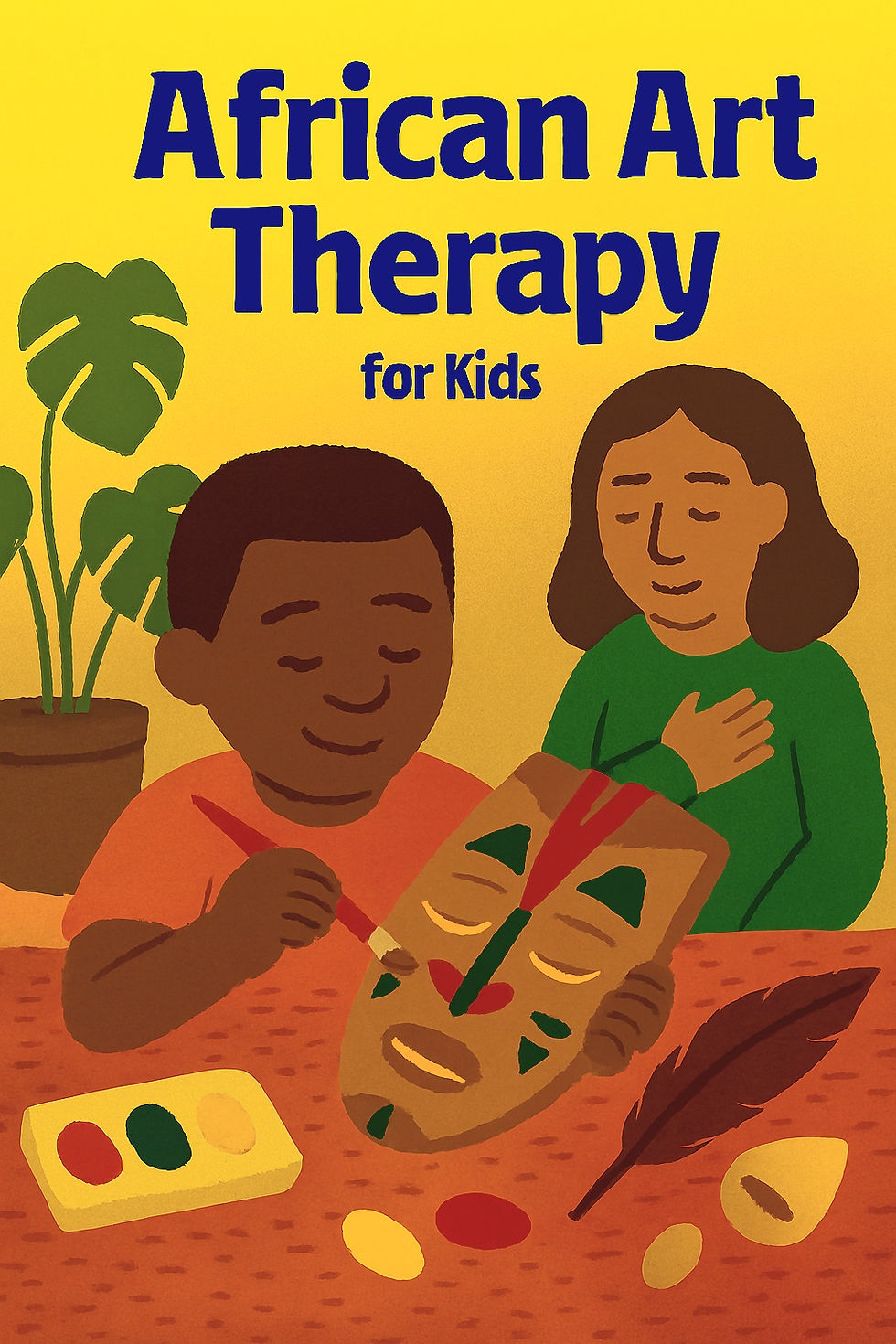
African art is more than decoration—it’s a language of healing, memory, and connection. In art therapy, these ancestral traditions become gentle tools for children to explore their emotions, build resilience, and feel part of something greater.
Children weave, sculpt, paint, and drum—not just to create, but to connect. Every bead tells a story. Every pattern holds a memory. Every rhythm becomes a heartbeat of hope.
What Makes African Art Therapy Unique?
African art therapy blends symbolic expression, communal healing, and sensory engagement. It honors:
- Tradition: Children learn from ancestral crafts—beadwork, textiles, pottery, masks
- Community: Art is shared, passed down, and celebrated together
- Symbolism: Colors, animals, and shapes carry emotional meaning
- Rhythm: Movement and music help children release and regulate feelings
- Connection to Land: Natural materials like clay, bark, and seeds ground children in place and presence
For Parents: Why It Matters
African art therapy offers children:
- Emotional Literacy: Children learn to name and express feelings through symbols and stories
- Cultural Belonging: They feel proud of their heritage and connected to ancestral wisdom
- Safe Expression: Art becomes a gentle way to process trauma, grief, or change
- Resilience Building: Through ritual and repetition, children learn to self-soothe and grow
Parents are invited to witness, support, and sometimes co-create. You don’t need to be an artist—just present. Ask your child about the colors they chose, the animals they painted, the rhythm they drummed. These are emotional clues.
“When children create with ancestral rhythm, they remember:
I am not alone. I am part of something strong.”
The Tale of the Courage Bracelet
A Story About African Art Therapy for Kids
In a sunlit studio filled with woven baskets and soft drums, a child named Amari sat beside their art therapist. A tray of beads lay before them—red for strength, blue for calm, yellow for joy, black for protection.
“Let’s make a bracelet,” the therapist said. “One that holds your courage.”
Amari chose a red bead first. “This is for when I stood up in class.”
Then a black bead. “This is for when I missed my dad.”
Then blue. “This is for when I breathed instead of cried.”
They strung the beads slowly, like threading memories. The therapist tied the bracelet gently around Amari’s wrist.
“Your courage is here,” she said. “You can wear it when you need to remember.”
Amari looked at the bracelet, then at her hands. “I made my strength,” she whispered. “I can carry it.”
In African art therapy, healing is woven into rhythm, color, and story. Children don’t just make art—they remember who they are. Each mask, bracelet, and drumbeat becomes a whisper from the ancestors:
“You are strong. You are seen. You belong.”
Through symbolic creation, children learn to hold their feelings with care. They build courage bead by bead, paint their bravery stroke by stroke, and carry their stories in the rhythm of their hands.


Comments