


Pottery & Feelings: A Healing Story for Little Hands

A Little History of Pottery
Long ago—before plastic cups and metal bowls—people shaped clay with their hands. They made pots to carry water, bowls to hold food, and jars to keep seeds safe. These pots weren’t just useful—they were beautiful. Some had painted stories, others had carved patterns like waves and stars. Pottery is one of the oldest kinds of art in the world. And every pot tells a tale of care, patience, and touch.
Pottery Tools
Pottery tools are like quiet helpers. A sponge smooths the clay like a gentle hug. A carving stick draws tiny lines, like whispers from your fingers. A wire cutter slices the clay like a ribbon. And the potter’s wheel spins slowly, helping your hands shape something strong and soft. Even your fingers are tools—pressing, pinching, and guiding the clay like a dance.
Pottery in Art Therapy
In art therapy, clay becomes a safe space. When feelings are too big or too quiet, children can shape them into bowls, creatures, or tiny homes. The clay listens. It doesn’t rush or judge. It holds sadness like a nest, anger like a mountain, and joy like a cup of sunshine. Pottery helps children feel grounded—like their emotions have a place to live.
Why Pottery Heals
Clay is soft but strong. It changes shape, but never disappears. That’s why it’s perfect for healing. When children sculpt with clay, they learn that their feelings can change too—and still be okay. They learn that they can create something beautiful from something messy. And when their pot is finished, they say: “I made this. I shaped my feeling. I gave it a home.”
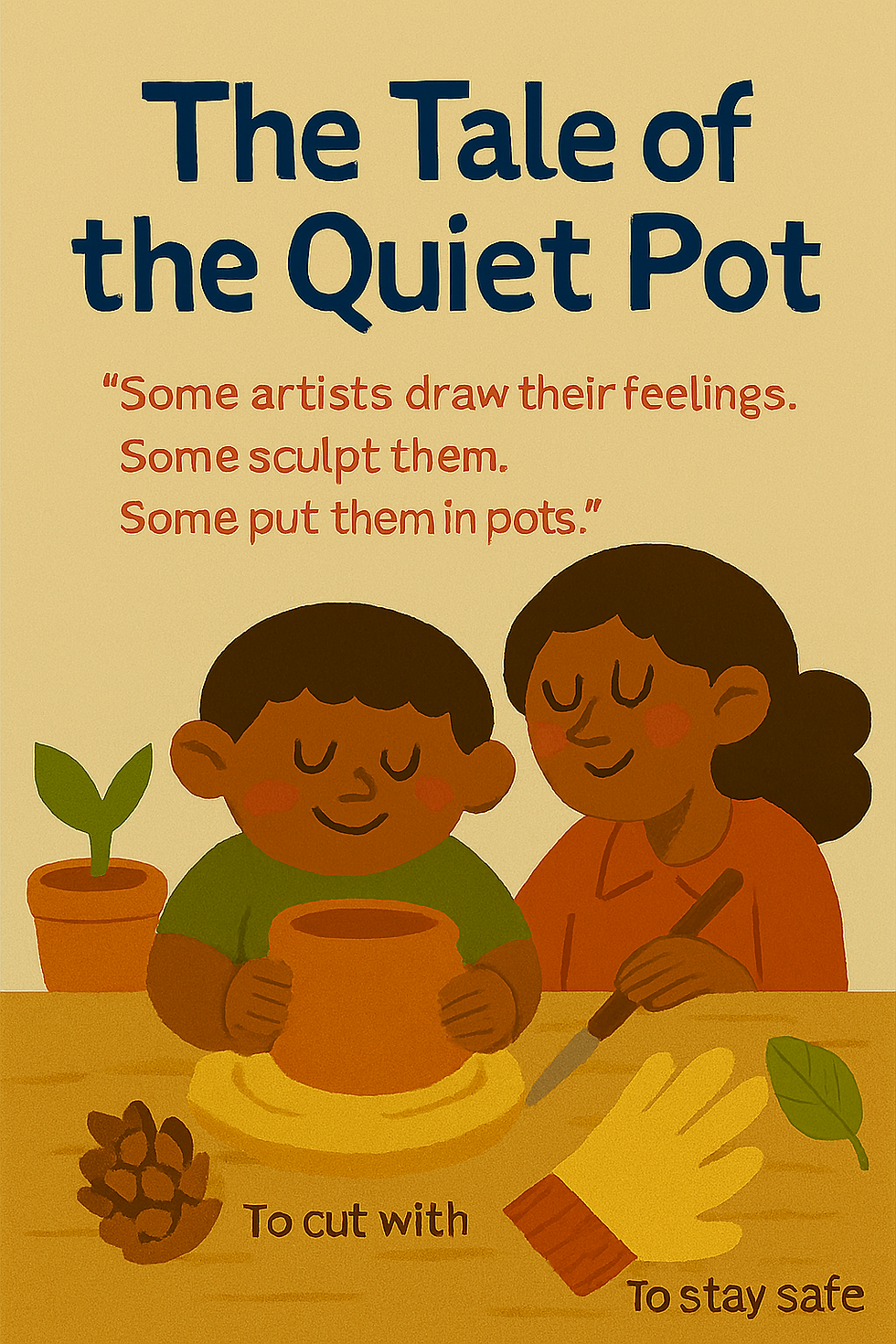
The Tale of the Quiet Pot
A Story About Pottery and Emotional Containment for Kids
Once upon a quiet morning, in a cozy sunlit studio, a child named Leo sat with a soft lump of clay in front of him. His art therapist knelt beside him with gentle eyes and warm hands. The air smelled like earth and moonlight.
“Would you like to give your feelings a home?” she asked, pointing to the clay.
“Now that you’ve shaped your pot, place a leaf inside. Whisper a feeling. Let it rest
“Some artists draw their feelings. Some sculpt them. Some put them in pots.”
Leo nodded. He knew about artisana and making things with natural tools. But this was different—it felt like holding a secret. Like a cup of wishes only his hands could shape.
Pottery is a safe place. The clay feels cool and comforting, like a quiet hug from the inside out.
As Leo began shaping the clay, the therapist placed a leaf by the pot—as if to say, “This feeling belongs here too. It is welcomed. It is held.”
And Leo smiled, knowing the pot would listen—and the clay would speak.
Pottery is more than art—it’s a quiet way to care for our feelings. When children shape clay, they shape safety. They learn that emotions can be held, softened, and transformed. Every bowl, creature, or tiny pot becomes a home for something inside.
“Clay doesn’t mind if you’re sad or shy. It just listens. And helps you speak.”
In the studio, with warm hands and gentle tools, children discover that they can make something strong from something soft. Something beautiful from something messy. And in that moment, they know:
“I am the maker. I am the holder. I am the healer.”


Comments