


Art in Bloom: A Journey Through Creative Renewal
Updated: May 27

Art in Bloom is a gentle, sensory art‑therapy journey designed to help you reconnect with your inner rhythm through watercolor, flowers, and mindful creative rituals. Each session unfolds like a season — from grounding and rooting to blossoming and gratitude — inviting you to slow down, breathe, and let your creativity open naturally.
Through soft colors, intuitive brushstrokes, and nature‑inspired exercises, you’ll explore how art mirrors the cycles of life: growth, rest, expansion, and renewal. This course is a sanctuary for anyone seeking calm, inspiration, and a deeper connection to themselves through the beauty of making.
Whether you’re an experienced artist or simply longing for a moment of peace, Art in Bloom offers a warm, inclusive space to create, reflect, and bloom at your own pace.
Materials: watercolor palette, brushes, 300 g/m² paper, scissors, glue, masking tape, fineliner, art journal, natural elements (flowers, leaves), candle, bowl of water, soft cloth, music soft ambient

Seeds of Presence
Before anything blooms, there is stillness — the fertile pause where intention takes root. This first module invites you to reconnect with your breath, your senses, and the quiet pulse of creativity within.
Objectives:
- Cultivate awareness through mindful observation
- Establish a gentle creative ritual
- Explore the relationship between grounding and artistic flow
Session Flow:
1. Opening Ritual — A short breathing exercise with soft instrumental music and a guided visualization of planting seeds in the soil of imagination.
2. Creative Warm‑Up — you choose three colors that represent your current emotional state and create abstract “seed” shapes on watercolor paper.
3. Reflection Circle — Sharing sensations and discoveries; noticing how color and movement mirror inner presence.
4. Closing Practice — A written or drawn affirmation: “I am the soil where creativity grows.”
Materials:
Watercolor paper, three brushes of different sizes, a limited palette (earth tones and greens), and a small natural object (stone, leaf, or seed) for tactile grounding.
Takeaway:
Presence is the foundation of creation. When we slow down enough to feel the world around us, art begins to bloom naturally.
Roots of Emotion
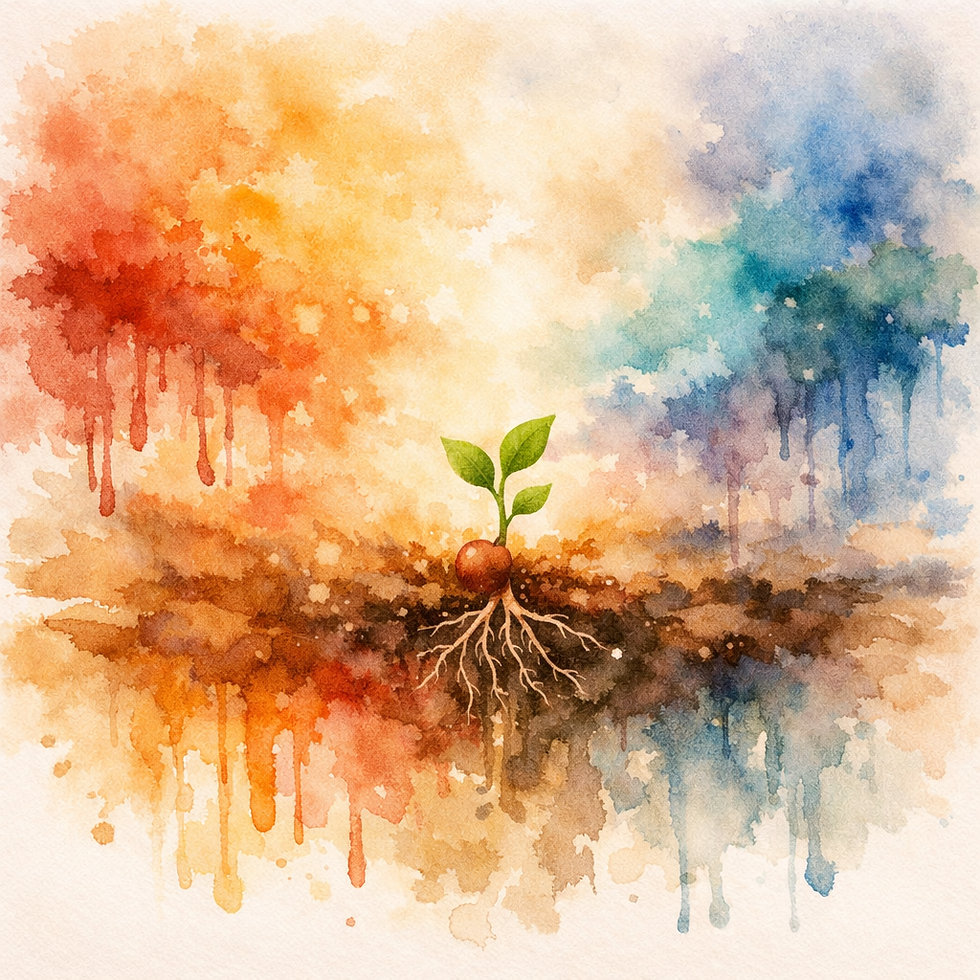
This module invites you to explore the emotional landscapes that live beneath the surface — the quiet roots that nourish expression. If Module 1 was about presence, Module 2 is about honesty: meeting what is alive inside with color, texture, and compassion.
The session begins with a grounding exercise focused on sensing the body’s emotional “temperature.” You are guided to notice where emotions sit — in the chest, the belly, the throat — and to translate these sensations into a palette. Warm tones, cool tones, muted washes, or bold strokes all become pathways to self‑understanding.
The creative practice centers on watercolor layering and intuitive mark‑making. You allow colors to bleed, merge, or stand apart, mirroring the way emotions move through the inner world. Texture becomes a language: soft gradients for tenderness, sharp edges for tension, flowing lines for release. There is no right or wrong — only expression.
A gentle reflection follows, encouraging participants to name what emerged without judgment. The focus is on witnessing, not fixing. This shared moment often brings a sense of relief and connection, reminding everyone that emotions, like roots, are natural and essential.
Materials include watercolor paper, a varied palette, brushes for both fine and broad strokes, and optional tools like sponges or salt to explore texture.
The essence of Module 2 is simple: emotions are not obstacles to creativity — they are its nourishment. When we honor what we feel, our art deepens, and so do we.

Petals of Expression
After rooting into presence and emotion, this module invites you into the gentle unfolding of expression — like petals opening to light. Here, creativity becomes more fluid, playful, and expansive. The focus shifts from inner sensing to outward blossoming.
The session begins with a short visualization of a flower slowly opening, breath by breath. You are encouraged to feel this same soft expansion in your chest, shoulders, and hands. This embodied openness becomes the starting point for the creative practice.
The artistic exploration centers on watercolor flow and collage inspired by nature’s unfolding forms. You experiment with soft gradients, petal shapes, and organic lines, allowing the brush to move with ease rather than precision. They may incorporate torn paper, pressed flowers, or delicate textures to build layers of meaning and beauty. The goal is not to replicate a flower, but to express the sensation of blooming.
A reflective pause follows, inviting participants to notice what opened within them during the process. Did something soften? Did a new color or gesture emerge? This moment of awareness helps them recognize their own creative expansion.
Materials include watercolor paper, a palette of soft pastels and floral tones, brushes for fluid strokes, collage papers, glue, and optional natural elements.
The essence of Module 3 is the joy of unfolding. When we allow ourselves to open gently, creativity flows with grace, and our inner landscape begins to blossom into form.
Blooming Together
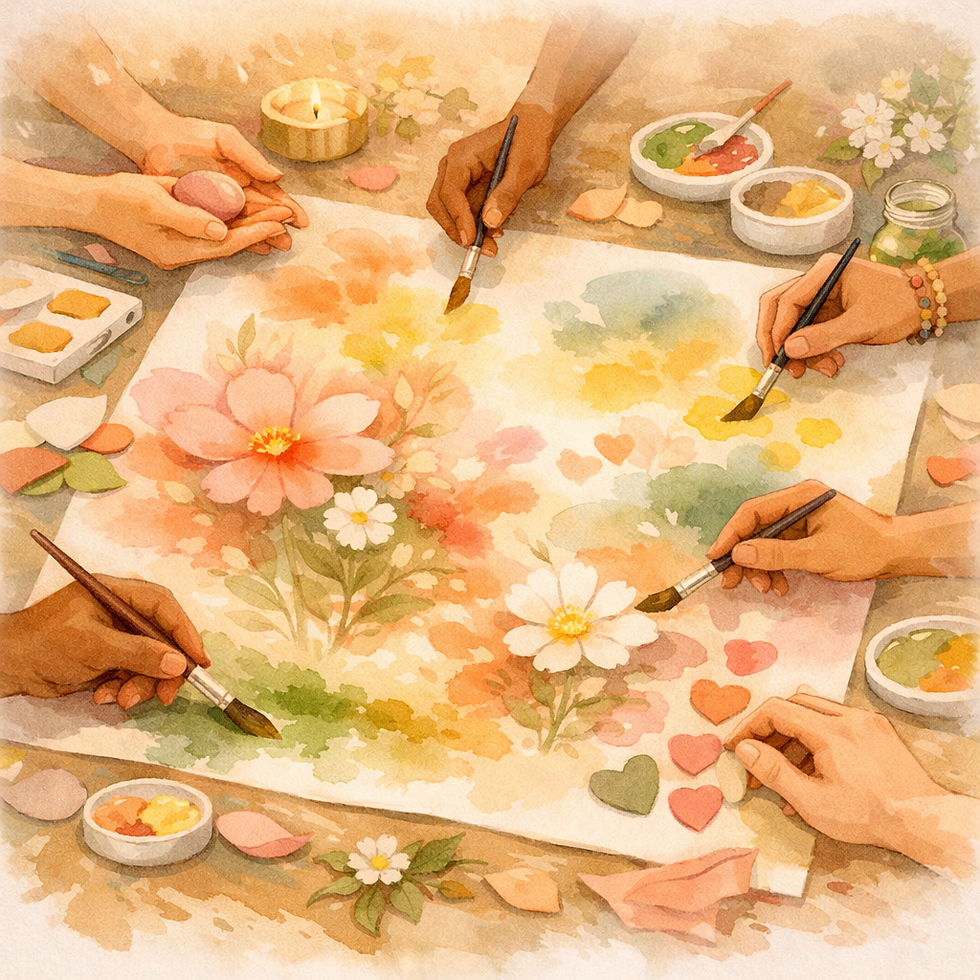
This module is where the garden expands. After exploring presence, emotion, and personal expression, participants now step into the gentle power of creating alongside others. Blooming Together is about connection — witnessing one another, inspiring one another, and allowing creativity to become a shared language.
The session opens with a soft relational ritual: a paired or small‑group exercise where participants exchange a simple gesture of welcome, such as offering a color, a word, or a small natural object. This moment sets the tone for collaboration rooted in kindness and curiosity.
The creative practice centers on a collective artwork. You work on a shared sheet of watercolor paper or assemble individual pieces that will later form a larger composition. They respond to each other’s marks, colors, and textures, allowing the artwork to evolve organically — like a field of flowers growing together. The process encourages trust, letting go of control, and embracing the beauty of co‑creation.
A group reflection follows, inviting you to share what it felt like to create in community. Many discover new forms of expression, unexpected harmonies, or the quiet joy of being seen and supported. This module often becomes a turning point — a reminder that creativity is not only personal but relational.
Materials include large watercolor sheets or modular papers, a shared palette of harmonious colors, brushes, collage elements, and natural textures that can be passed around the group.
The essence of Module 4 is the magic of togetherness. When we create side by side, our individual blooms weave into a collective garden — vibrant, diverse, and alive with shared meaning.

Harvest of Gratitude
This module is the quiet gathering of everything that has grown so far. After presence, emotion, expression, and shared creation, you are invited to pause and harvest the insights, sensations, and small transformations that have unfolded within you. Harvest of Gratitude is a moment of integration — a soft exhale before the final ritual.
The session opens with a grounding practice focused on remembering: recalling colors, gestures, textures, and emotions from previous modules. You are guided to notice what has shifted in your inner landscape, what has softened, and what has blossomed. This gentle reflection becomes the soil for the creative work.
The artistic practice centers on art journaling — a blend of watercolor, writing, and intuitive mark‑making. Participants create a gratitude page or spread, weaving together words, colors, and symbols that represent what they are thankful for in their creative journey. Some may paint abstract shapes, others may write phrases or layer soft washes of color; all forms are welcome. The goal is not to produce a polished piece, but to honor the process and the growth it has nurtured.
A closing circle invites you to share one thing you are grateful for — a moment, a color, a feeling, a connection. This shared gratitude deepens the sense of community and prepares the group for the final collective ritual.
Materials include watercolor paper or journals, a warm palette of earth and gold tones, pens or pencils for writing, and optional collage elements to layer memories and meaning.
The essence of Module 5 is simple and tender: gratitude gathers the journey into the heart. When we pause to acknowledge what has grown, we create space for even deeper blooming.

Art in Bloom Ritual
This final module is the flowering of the entire journey. Everything that has been rooted, felt, expressed, and shared now comes together in a closing ritual that honors each participant’s growth. Art in Bloom Ritual is both a celebration and a soft transition — a way of acknowledging the transformation that has unfolded while gently releasing the space.
The session begins with a quiet moment of centering, inviting participants to revisit the path they’ve walked: the grounding of Module 1, the emotional depth of Module 2, the unfolding of Module 3, the shared creativity of Module 4, and the gratitude of Module 5. This inner review becomes the soil for the final creation.
The artistic practice is a collective or personal ritual piece — a symbolic artwork that represents each participant’s unique blooming. Some may create a final watercolor painting, others a collage, a mandala, or a layered piece that incorporates elements from previous sessions. The focus is on honoring the journey rather than producing a perfect result. Participants are encouraged to follow intuition, allowing colors and shapes to emerge naturally.
The ritual concludes with a closing circle. Each person is invited to share a word, a gesture, or a small piece of their artwork that symbolizes what they are taking with them. This moment creates a sense of completion, connection, and gentle release. The group acknowledges the beauty of the collective garden they have grown together.
Materials include watercolor paper or a chosen final format, a harmonious palette, collage elements, natural textures, and any meaningful objects participants wish to incorporate.
The essence of Module 6 is sacred closure. When we honor our blooming, we step forward with clarity, softness, and renewed creative life.

Art in Bloom closes with a sense of fullness — a garden tended with presence, emotion, expression, community, and gratitude. Over the course of these six modules, you have moved from grounding into blossoming, discovering that creativity is not a performance but a living process. You have learned to listen to your inner landscapes, to express yourself with honesty and tenderness, and to create in connection with others.
The journey leaves you with a deeper trust in your own creative rhythm, a renewed sense of calm, and a collection of artworks that reflect your inner growth. More importantly, it offers a way of being — a slower, more mindful relationship with art and with themselves.
As the course comes to a close, you carry with you the understanding that blooming is not a single moment but an ongoing cycle. They leave with open hands, open hearts, and the quiet confidence that creativity will continue to unfold in its own time, just like a flower turning toward the light.
Thank you for blooming with us — may your art continue to grow in light.


Comments