


Trop Mignon, l’art du bonheur - Louvre Lens
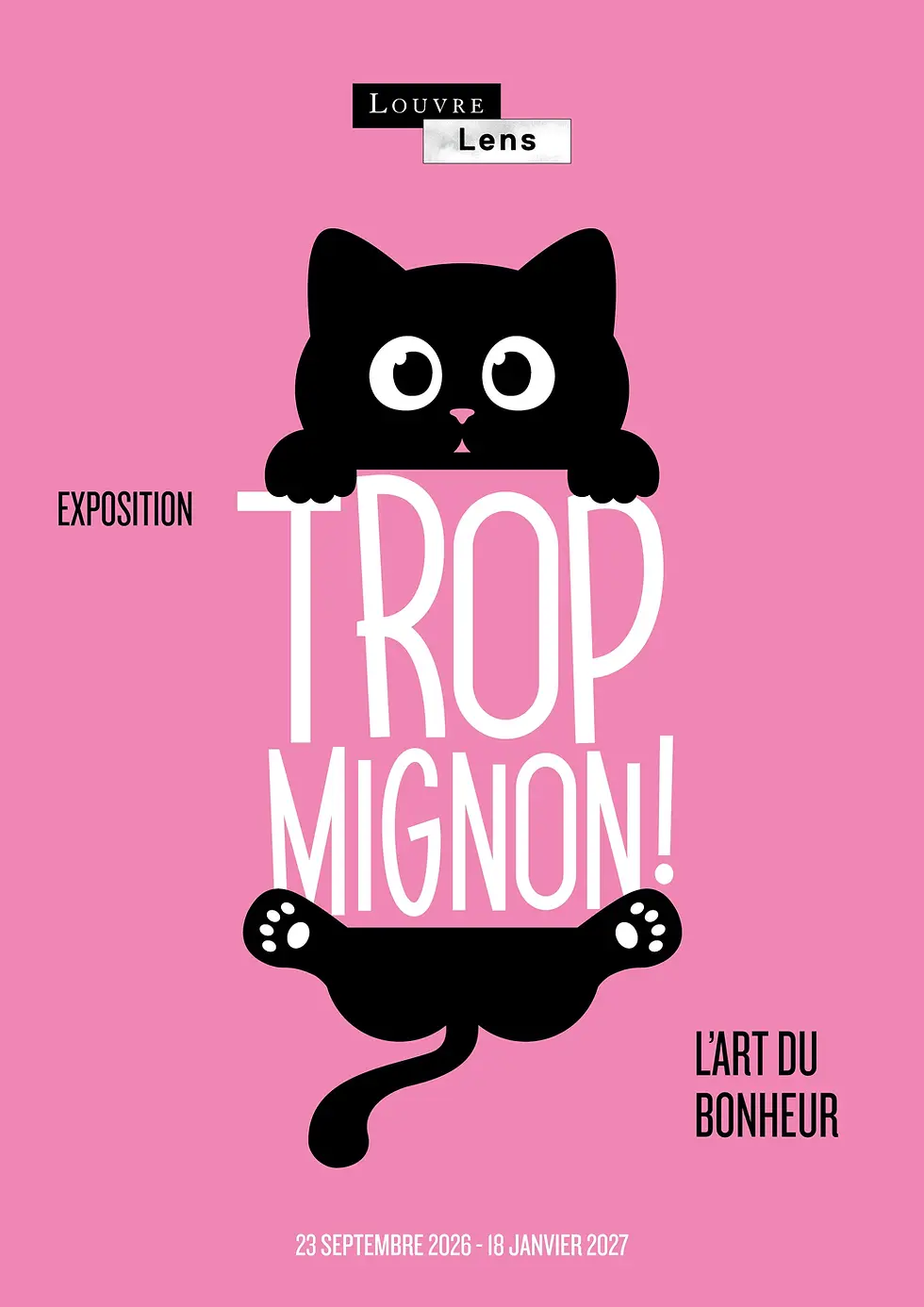
Trop Mignon, l’art du bonheur — at once tender, dazzling, and quietly political — arrives as one of the most anticipated exhibitions of the season. Opening at the Louvre‑Lens from 23 September 2026 to 18 January 2027, it unfurls a luminous journey through 300 artworks that explore why certain images soothe us, move us, or make us smile.
A gentle revolution in the museum world
The exhibition asks a deceptively simple question: why do artworks make us feel good? The answer, it suggests, lies in the long emotional history of the “mignon” — that aesthetic of tenderness, roundness, softness, and vulnerability that has become omnipresent in our digital age. From Egyptian cat statues to Jeff Koons’ glossy creatures, from Renoir’s delicate portraits to Annette Messager’s unsettling plush figures, Trop mignon ! traces how artists have shaped our desire for comfort and joy across millennia.
The curators, Annabelle Ténèze (Louvre‑Lens) and Émilie Girard (Musées de Strasbourg), build a narrative that is both scholarly and sensorial. Their scenography, designed by Mathis Boucher, invites visitors to wander through immersive rooms where pink blooms, glitter shimmers, and soft textures whisper of childhood memories and cultural rituals.
The emotional power of animalsTim Berners‑Lee once said that the most surprising phenomenon of the internet was the success of cat videos. Trop mignon ! takes this intuition seriously: animals, across cultures, have long been emotional anchors. Egyptian cats, Renaissance putti, Rosa Bonheur’s loyal companions, William Wegman’s iconic dogs — each reveals how tenderness has shaped our collective imagination.
The exhibition highlights masterpieces such as Jules Le Roy’s Chats dans une commode and Nicolas Poussin’s Concert d’amours, where humor, innocence, and affection become visual languages of comfort.
Pink, glitter, kawaii: a global language
One of the most captivating chapters explores the history of pink, born in the 18th century as a symbol of refinement before becoming a cultural phenomenon. The show also dives into the global rise of kawaii, the Korean and Japanese aesthetics of cuteness that have shaped fashion, toys, and digital culture. Glitter, rainbow palettes, and soft toys appear not as trivial decorations but as emotional technologies — tools for care, resilience, and self‑expression.
Tenderness meets critique
Behind its sweetness, the mignon carries political weight. The exhibition reveals how contemporary artists use cute codes to question gender norms, consumer culture, and social violence. Cindy Sherman’s pink transformation into Madame de Pompadour, Takashi Murakami’s hyper‑cute universes, or Annette Messager’s troubling plush creatures show how tenderness can coexist with revolt — how softness can become a form of resistance
A museum experience that heals
Designed as a journey through our inner landscapes, Trop mignon ! invites visitors of all ages to feel first, then understand. Interactive devices encourage them to explore their own emotional responses — a rare invitation in the museum world, where knowledge and feeling often stand apart. Here, they merge. The exhibition ultimately suggests that joy is a form of knowledge, and that tenderness — far from being naïve — is a force capable of softening the noise of the world.
Exhibition details
Trop mignon ! L’art du bonheur
Musée du Louvre‑Lens
23 September 2026 → 18 January 2027
A partnership with the Musées de la Ville de Strasbourg.



Comments